
Last updated October 15, 2026
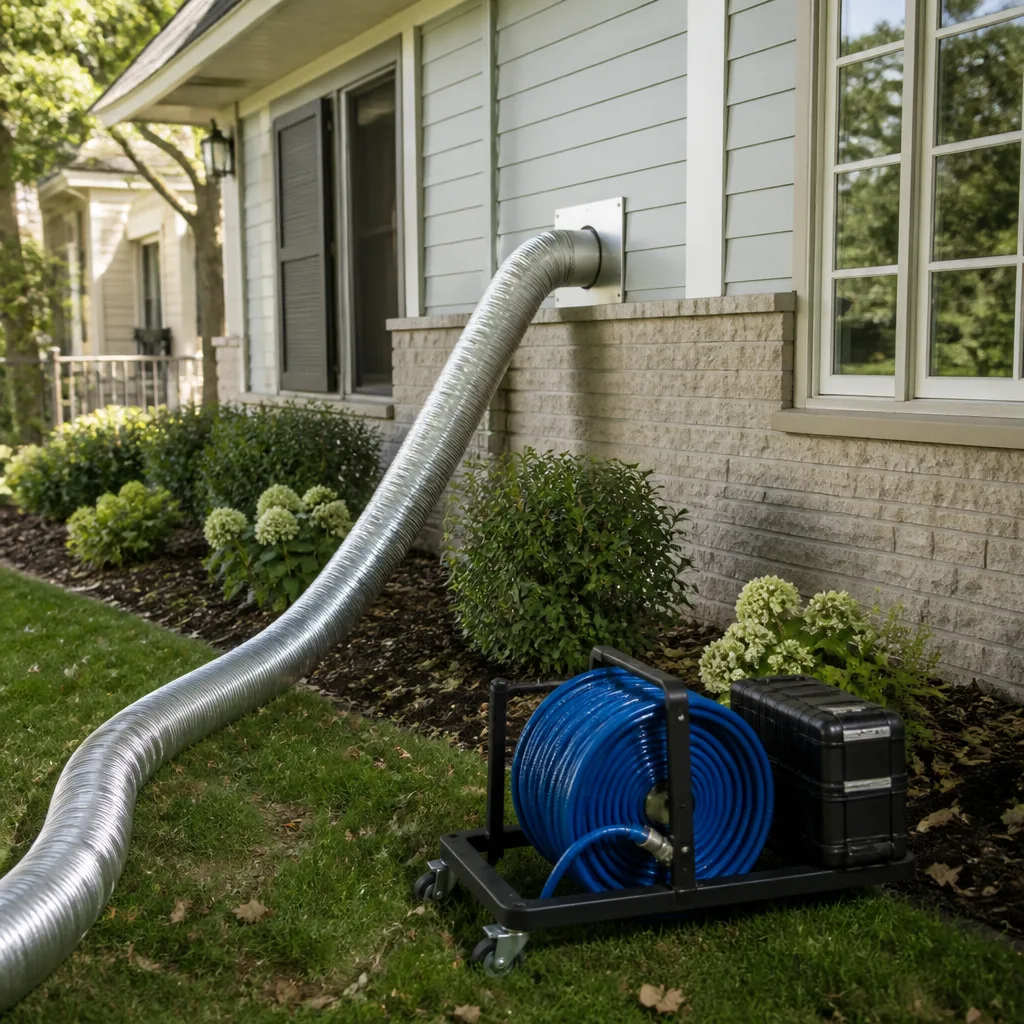 Whole-home duct cleaning
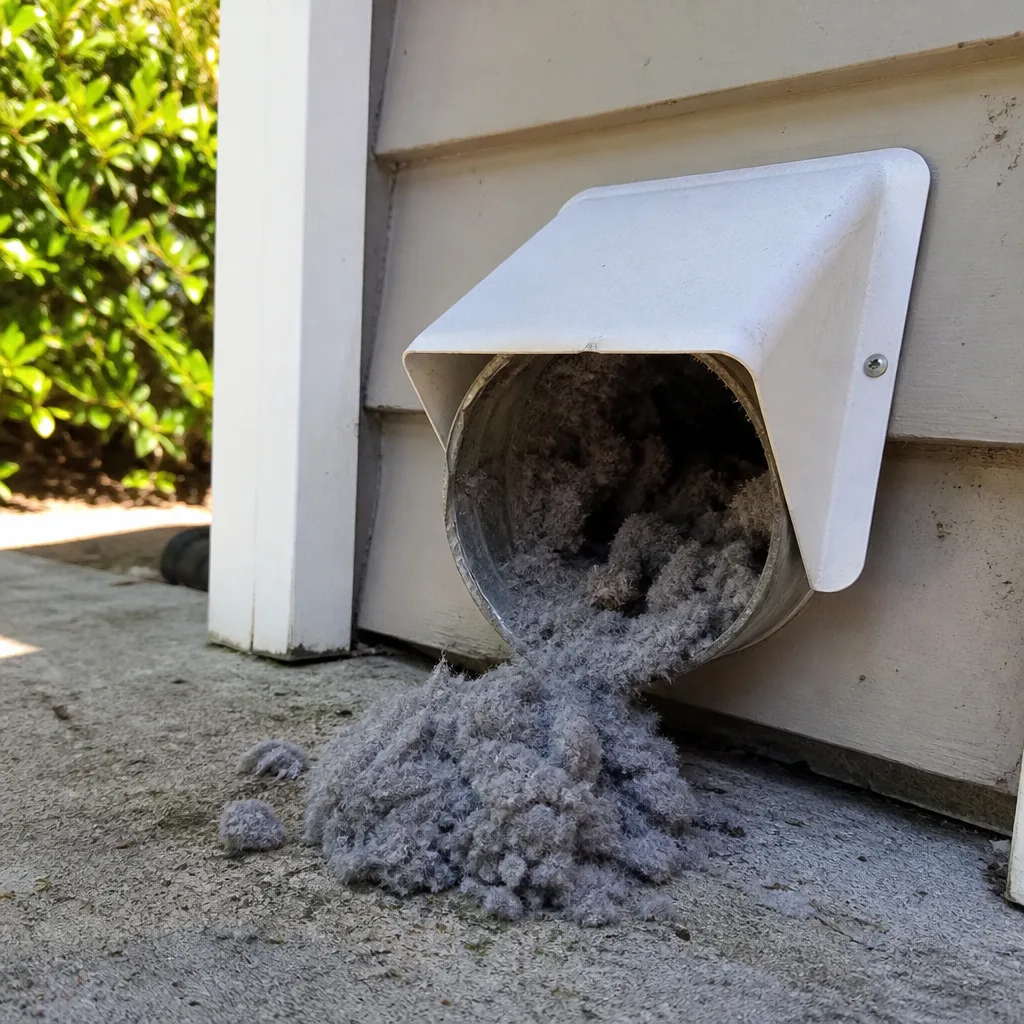 Dryer vent cleaning
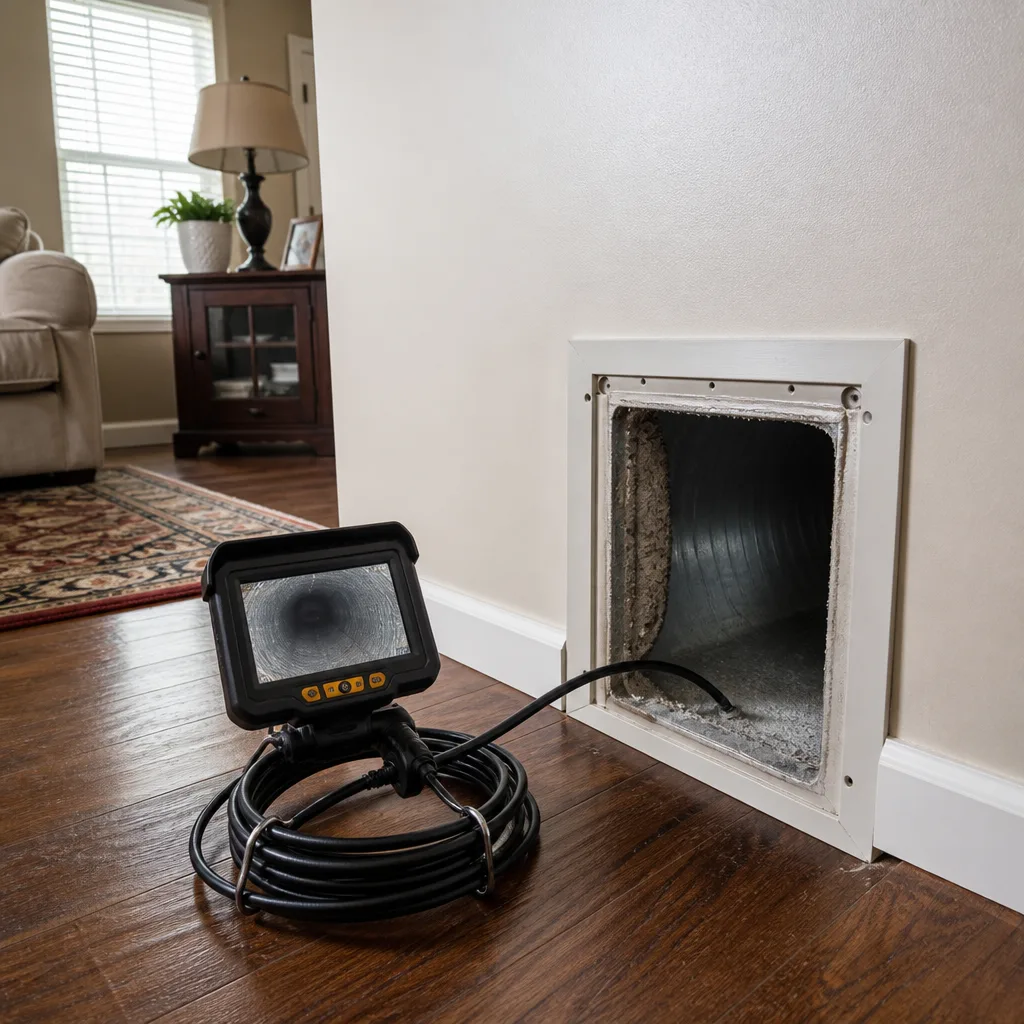 Camera inspection
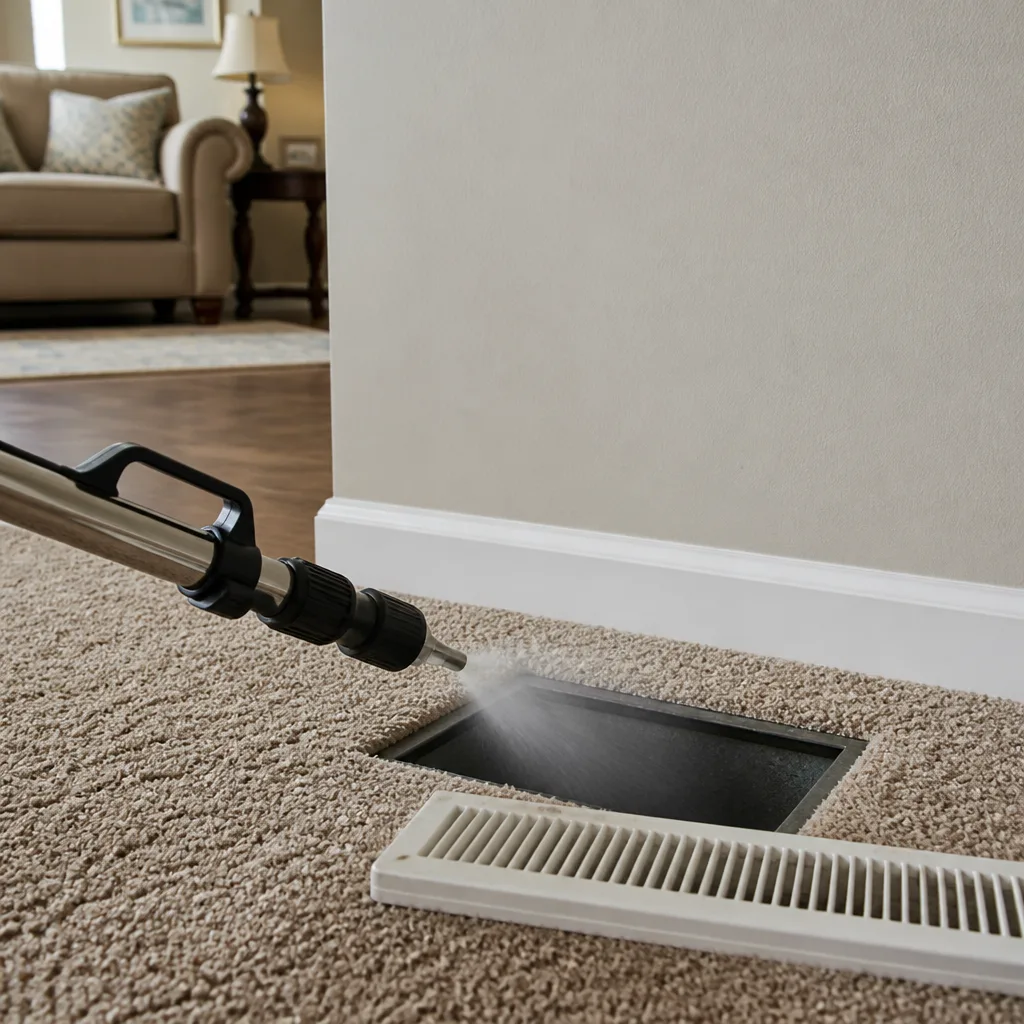 Sanitizing & deodorizing
Whole-system duct and dryer vent check with before-and-after photos - you see exactly what came out of your vents
That "$99 whole-house special" is a bait ad - the real number appears once they are in your hallway, or the "clean" is a shop-vac at the register. We photograph the inside of your ducts before and after instead.
DIY vs Professional Air Duct Cleaning: The Atlanta Homeowner’s Decision Guide
Here’s a counterintuitive fact for Atlanta homeowners: the $25 dryer vent brush kit you can order on Amazon tonight will do a genuinely good job on your dryer vent. That same kit, applied to your HVAC supply and return ducts, will mostly relocate dust from one section of ductwork to another. You’ll feel productive for an afternoon, and the dust will settle back into your living room within two weeks. This guide gives you the straight line between what a homeowner in Atlanta can do well and what actually requires professional negative-pressure equipment. No scare tactics, no manufactured urgency. Just the physics of how ducts get dirty, what actually removes that dirt, and the three questions that tell you which path fits your home.
Styles & brands we work with
Quick Answer
The honest split for most Atlanta homes: DIY works for visible surfaces you can reach, filter changes, and dryer vent maintenance on short straight runs. Professional our Air Duct Cleaning services become the right call when you’re dealing with interior duct surfaces, mold suspicion, post-renovation debris, or symptoms that point deep into the trunk lines. A homeowner with a shop vac and a brush can clean roughly the first three feet of each supply register. Everything beyond that requires negative-pressure extraction, the technique where the system is placed under suction before agitation begins, to remove debris instead of pushing it deeper.
Table of Contents
- What DIY Duct Cleaning Actually Does (and Doesn’t Do)
- The DIY Tools That Actually Work (and the Ones to Skip)
- Negative Pressure Explained: Why Professional Results Don’t Come From a Shop Vac
- Rotobrush vs. a Shop-Vac-and-Brush Kit: A Frank Side-by-Side
- The One DIY Mistake That Creates a Professional Emergency
- The Atlanta Decision Matrix: DIY Is Fine, Hybrid Approach, or Call a Pro
- Common Mistakes to Avoid
- When to Call a Professional
- Frequently Asked Questions
- The Bottom Line
What DIY Duct Cleaning Actually Does (and Doesn’t Do)
Let’s be precise about the word “ducts.” Your HVAC system is not one long pipe. It’s a network: supply registers where conditioned air exits, return grilles where air enters, and branching trunk lines that connect them behind walls, above ceilings, and under floors. The parts you can see and touch represent maybe five to ten percent of the total interior surface area. That’s the core of the DIY question.
When you remove a supply register in an Atlanta ranch home built in the 1980s and vacuum the visible section with a crevice tool, you’re cleaning what’s called the register boot. This is the metal transition piece between the visible vent and the hidden duct run. It’s also the dustiest section visible from the living space, which is why it looks satisfying to clean. The problem: the register boot connects to a trunk line that runs fifteen, thirty, sometimes fifty feet deeper into the home. That trunk line holds more dust than the boot, and it’s entirely out of reach.
We’ve run cameras into Atlanta ducts in neighborhoods from East Atlanta to Sandy Springs. The consistent pattern: homes show heavy dust accumulation in the first three feet of ductwork near each register, moderate accumulation in the midsection, and surprisingly heavy accumulation at the far end of trunk lines where airflow slows and drops out. DIY register-level cleaning addresses the first zone only. The second and third zones stay untouched.
Here’s what a disciplined DIY approach can legitimately accomplish in a weekend:
- Register and grille cleaning: Remove every supply and return cover, scrub them with warm water and a mild degreaser, and vacuum the visible boot section. This is real cleaning. It reduces the dust that re-enters rooms immediately.
- Filter replacement: A clean MERV 8-11 filter, replaced every 60-90 days during Atlanta’s heavy cooling season, does more for your indoor air quality than any duct cleaning. This is not a substitute for duct cleaning, but it’s the highest-value maintenance task a homeowner can do.
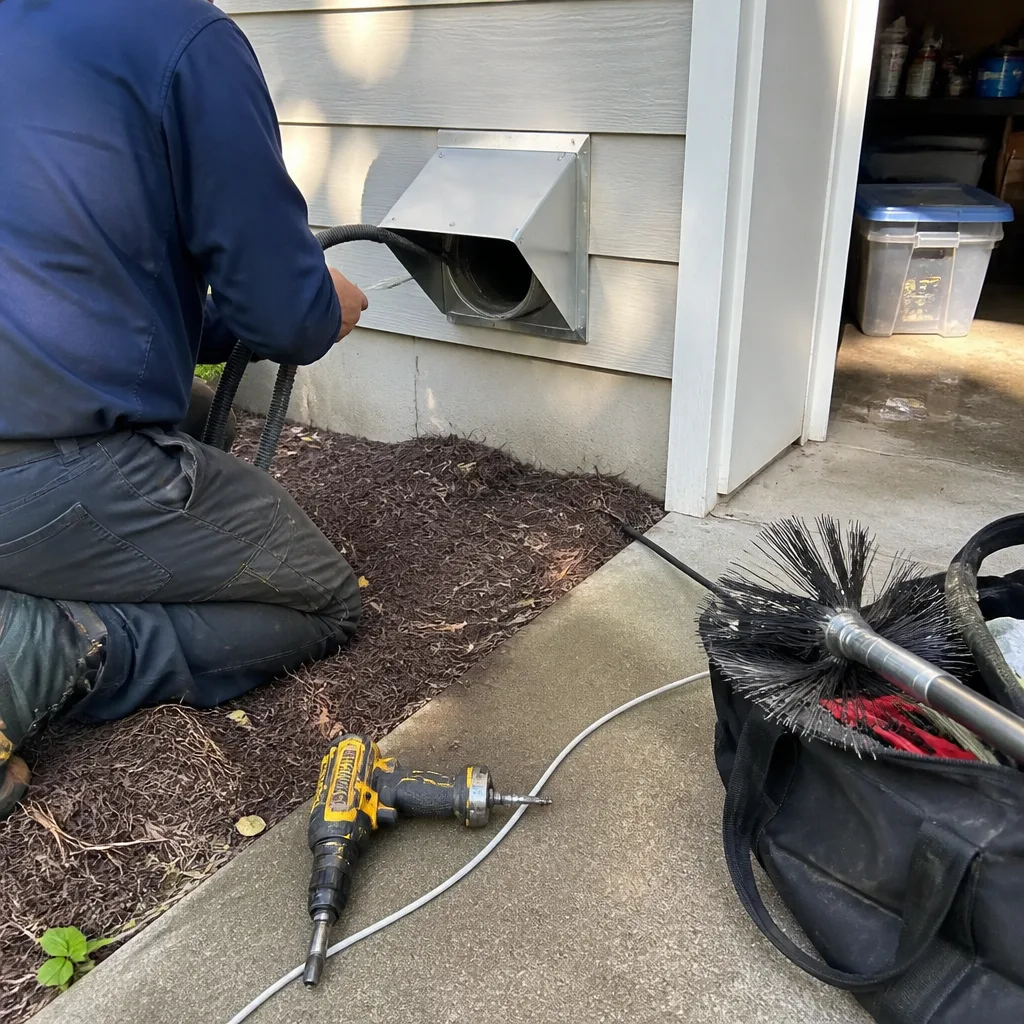
- Dryer vent brushing on short straight runs: If your dryer is on an exterior wall and the vent run is under ten feet with one bend or fewer, a $25 brush kit used with a cordless drill works well. In Atlanta’s humidity, lint compacts faster than in dry climates, so this maintenance matters more here than in Phoenix.
- Return air cavity cleaning: The cavity behind your return grille where the filter sits is often overlooked. Vacuuming this area improves airflow and reduces the dust pulled into the blower.
What DIY cannot do: remove dust from trunk lines, clean the evaporator coil, treat microbial growth inside the duct system, remove construction debris, or access the blower compartment without risk to the equipment. Those limitations are not a sales pitch. They’re the physical geometry of your home’s ductwork.
The DIY Tools That Actually Work (and the Ones to Skip)
If you’re going to spend a Saturday working on your ducts, spend your money on the tools that produce real results and skip the ones designed to look impressive in a product photo. Here’s the straight assessment based on what we see in Atlanta homes.
- Dryer vent brush kit with drill attachment (works): Holikme, Gardus, and Sealegend all make $20-$35 kits with flexible rods that chuck into a cordless drill. For dryer vents under ten feet with minimal bends, these genuinely work. For longer runs or any run with multiple elbows, the brush can detach inside the vent, and now you’ve added a blockage to the lint problem.
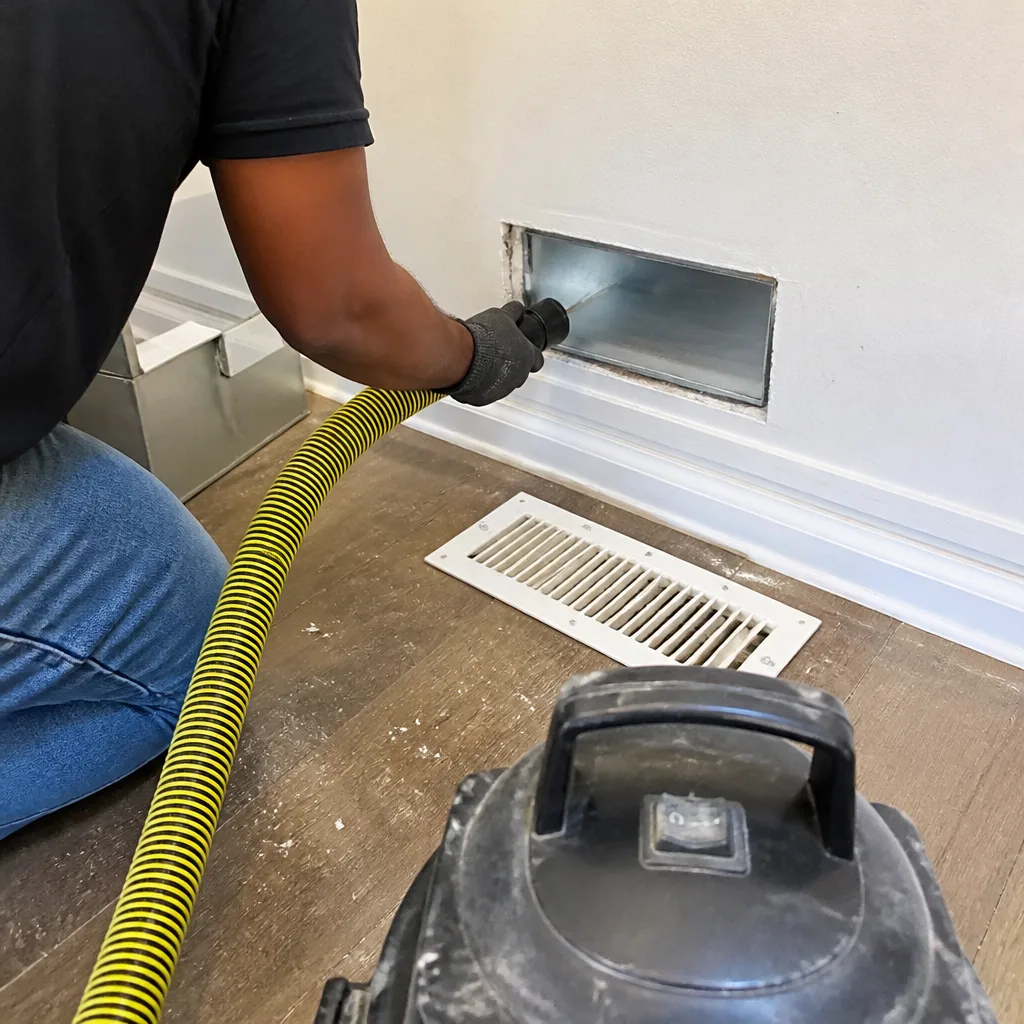
- Shop vac with HEPA filter and bag (works, with limits): A 5-6 HP shop vac with a HEPA-rated filter and collection bag is the most useful tool a homeowner can own. It handles register boots, return cavities, and surface cleaning. What it cannot do is create the negative-pressure airflow that professional equipment generates. This is the tool that cleans the visible five percent well and the hidden ninety-five percent not at all.
- Inspection camera/drain snake camera (works, surprisingly well): A basic borescope camera that connects to your phone runs $30-$50 on any major marketplace. It slips through a register opening and lets you see what the inside of your ducts actually looks like. For Atlanta homeowners deciding between DIY and professional cleaning, this is the single best purchase. It replaces guesswork with visual evidence.
- “Air duct cleaning kits” marketed for HVAC systems (skip): These kits usually combine a flexible rod, a brush head, and an adapter for a drill or vacuum. They’re pitched as professional-grade tools at homeowner prices. The problem: without negative pressure, the brush loosens debris and the airflow from your shop vac is nowhere near strong enough to capture it at the source. The debris goes airborne, travels through the duct, and settles elsewhere. You’ve relocated the dust, not removed it.
- Foggers, odor bombs, and sanitizing sprays (skip, mostly): Over-the-counter duct sanitizing products make the air smell different without addressing the source of whatever’s causing an odor. In Atlanta’s summer humidity, trapped moisture in ducts is a common odor source. No spray fixes a moisture problem. We’ll get to the bleach-in-ducts emergency shortly.
Negative Pressure Explained: Why Professional Results Don’t Come From a Shop Vac
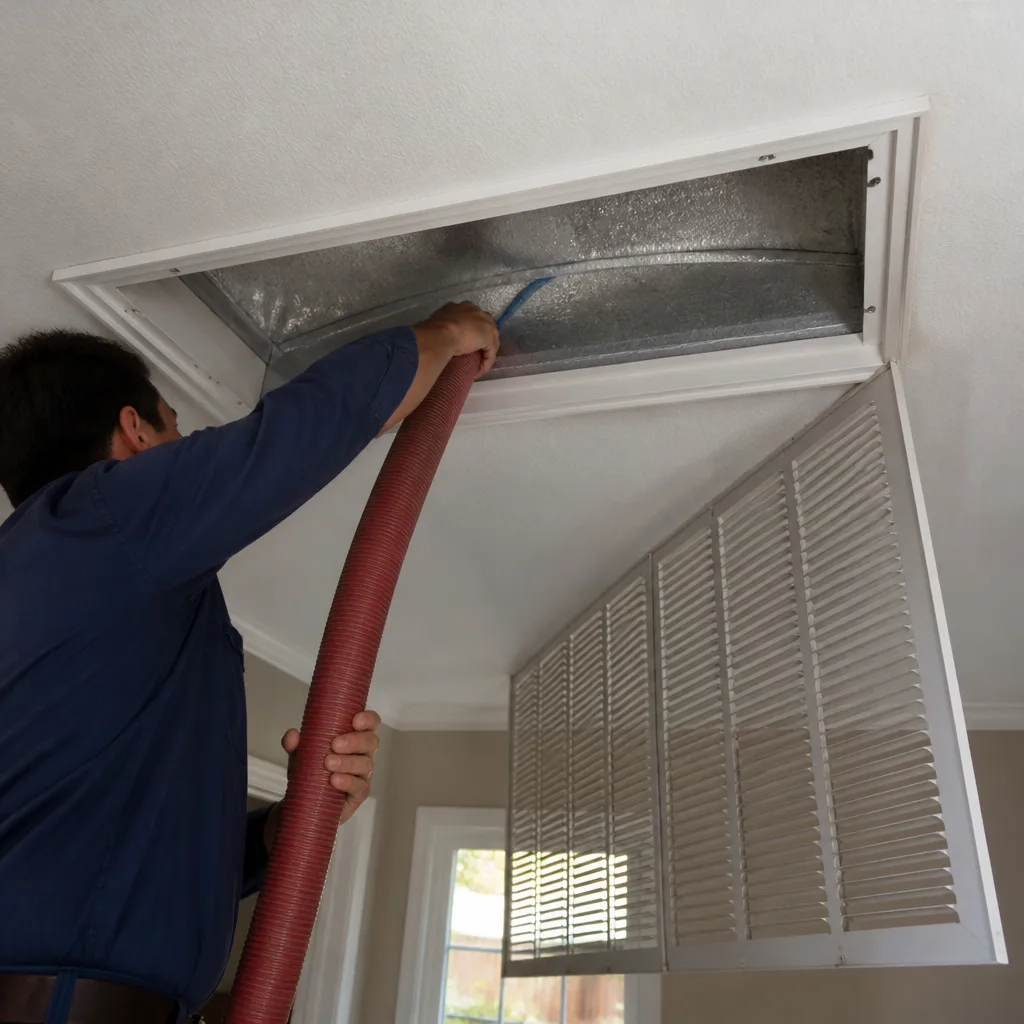
Here’s the trade term you’ll hear from any professional duct cleaner, decoded: negative-pressure extraction means the duct system is placed under suction before any agitation begins. A large HEPA-filtered vacuum unit, like a Nikro unit, connects to the duct system near the air handler and pulls air through the entire network. The system is now pulling air from everywhere. Then, rotary brushes or compressed air tools agitate dust off the duct walls. Because the system is under suction, the loosened debris moves toward the vacuum, not back into your living room.
This matters because of a simple rule: agitate first, then vacuum, and the debris goes airborne. Vacuum first, then agitate, and the debris is captured as it’s released. It’s the same principle as holding a running vacuum next to a dusty surface while you brush it, except scaled to an entire home’s duct network.
When you use a shop vac and brush at a register in your Atlanta living room, the shop vac’s airflow reaches a few feet into the duct at most. The brush, meanwhile, loosens dust deeper in the run. That loosened dust has two destinations: back into the vacuum’s airflow, or further down the trunk line to settle in a new location. In practice, most of it settles further down the trunk line. You’ve pushed your dust problem toward the center of your home.
The professional sequence looks like this, and it’s worth knowing exactly what you’re paying for:
- Containment setup: The HVAC system is turned off. Access is created at the supply and return plenums near the air handler. Drop cloths protect floors, and containment units (like those from Abatement Technologies) create a controlled work zone.
- Negative pressure established: The HEPA vacuum connects to the duct system and runs continuously. The system is now under suction.
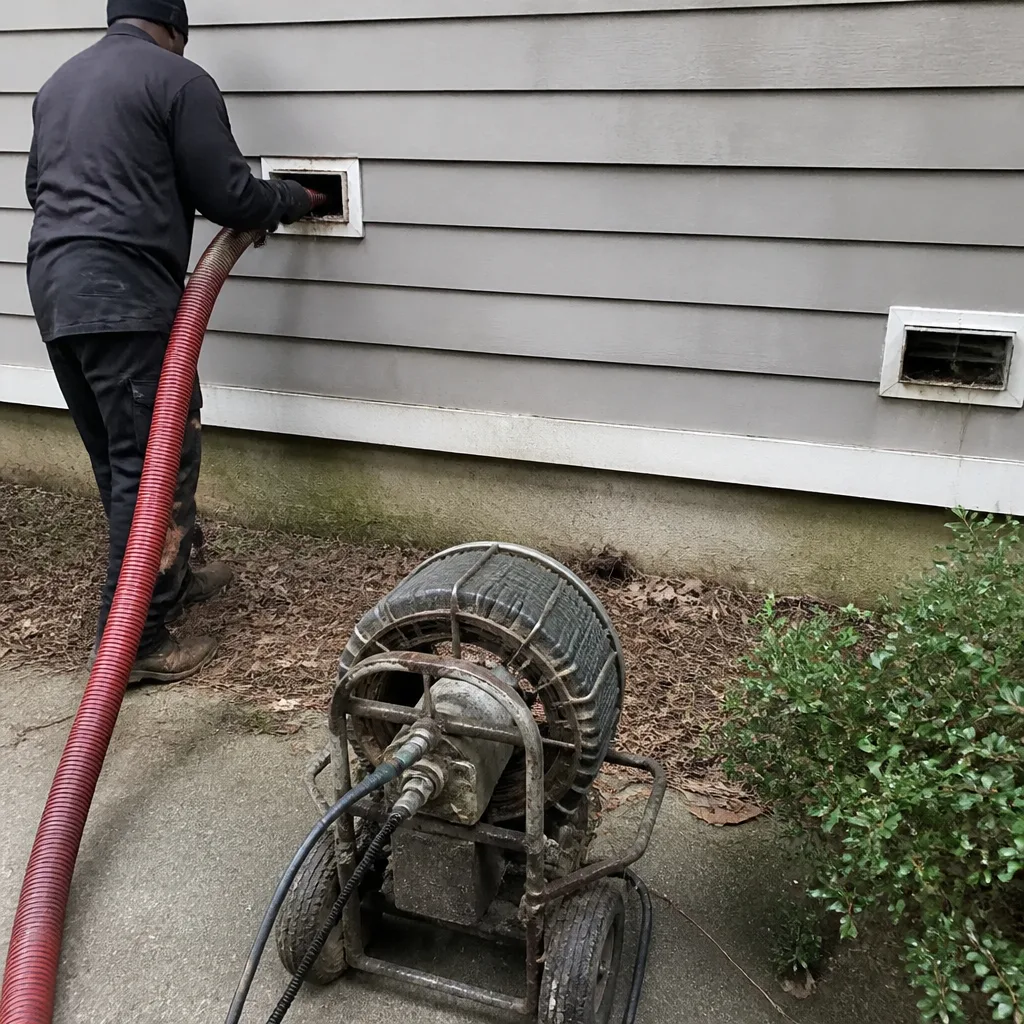
- Agitation: A rotary brush system like Rotobrush travels through each duct run, loosening debris from the walls. The brush physically contacts the duct surface, which is what separates rotary brushing from air-whip-only cleaning.
- Debris extraction: Loosened debris is pulled into the HEPA vacuum, not released into the home.
- Component cleaning: The blower, evaporator coil, drain pan, and plenums are cleaned separately. This matters in Atlanta because our long cooling season means coils run for thousands of hours yearly and collect biological growth in the humidity.
- Final inspection: Before-and-after photos document the work. This is the Relay Standard applied to duct cleaning: you see what was inside your ducts before, and you see the same sections after.
None of this sequence is possible with homeowner-grade tools. It’s not a question of effort. It’s a question of airflow volume, measured in cubic feet per minute, that a shop vac simply cannot produce.
Rotobrush vs. a Shop-Vac-and-Brush Kit: A Frank Side-by-Side
We’ve used Rotobrush rotary brush systems in Atlanta homes for years, and we’ve also seen what a determined DIY attempt looks like through a borescope before and after. Here’s the unvarnished comparison.
What a Rotobrush system physically does
A Rotobrush is a powered rotary brush head attached to a flexible shaft, connected to a high-powered HEPA vacuum. The brush spins at high RPM against the duct walls while the vacuum extracts loosened debris simultaneously. The brush is sized to the duct dimensions, which means it makes physical contact with the surface rather than waving in the general direction of the dust. A Rotobrush can travel the full length of a duct run, navigating bends and transitions. In Atlanta homes, where duct runs date anywhere from the 1950s to last year’s renovation, that ability to navigate without disassembly matters.
The result: debris is physically dislodged, immediately captured, and removed from the home entirely. The HEPA filtration on the vacuum means what’s sucked out stays out, not exhausted back into the HVAC system or the living space.
What a shop-vac-and-brush kit physically does
A shop vac with a brush attachment does two things. First, it vacuum-cleans the visible surfaces. The register boot gets noticeably cleaner. Second, it loosens dust beyond the vacuum’s reach. That dust travels down the duct, away from the register, until it finds a low-airflow area to settle. In a 1950s Atlanta home with aging metal ducts, that settling zone is often a sagging section of trunk line or a partially collapsed flex duct, which compounds existing airflow problems.
The honest summary: one system removes debris from the whole duct network. The other system moves debris from the visible portion into the hidden portion. If your goal is a genuinely cleaner duct system, only one approach achieves it. If your goal is to make the registers look cleaner for a few weeks, the shop vac approach works fine.
For Atlanta homeowners curious about what’s actually in their ducts, a $30 borescope camera is the great equalizer. Look before and after. The evidence will tell you more than any guide can.
The One DIY Mistake That Creates a Professional Emergency
This section exists because we’ve responded to the aftermath too many times in Atlanta homes. The scenario: a homeowner notices a musty smell from the vents, searches for solutions, and finds tutorials recommending bleach spray or bleach solution fogging to “kill mold in ducts.” Then they spray or fog, the smell intensifies, and they call us.
Here’s what happens. Bleach is a biocide, but it’s also a corrosive liquid. When sprayed inside ductwork, it contacts two surfaces: the metal duct walls and the duct board lining or insulation, depending on your system. On metal, bleach is mostly ineffective against mold because the mold’s root structure penetrates into porous adjacent materials where the bleach doesn’t reach. On duct board and fiberglass insulation, common in Atlanta homes built before the mid-1980s, bleach saturates the porous material. It kills surface organisms, but it also adds moisture. In ductwork, added moisture plus darkness plus warm temperatures creates the exact conditions mold re-establishes in.
Three weeks later, the smell is worse, not better. The bleach residue also creates a persistent chemical odor that the HVAC system now circulates through the entire home. The remediation cost is now significantly higher than an air duct cleaning would have been originally, because the duct board may need replacement rather than cleaning.
If you suspect mold in your ducts, here’s the honest guidance: the only safe path is professional assessment. For related reading, see our How to Hire a Air Duct Cleaning Contractor in Atlanta: A Step-by-Step Guide. Air duct cleaning in Atlanta homes with mold suspicion requires inspection first, then a decision tree based on what’s actually there. Some situations are cleanable. Some require duct section replacement. Guessing wrong with bleach makes the worst-case outcome more likely, not less. In our experience serving Atlanta, the homes where a homeowner attempted bleach remediation needed more extensive work than homes where the homeowner called first.
The Atlanta Decision Matrix: DIY Is Fine, Hybrid Approach, or Call a Pro
Here’s a decision matrix based on three variables: home age, duct material, and symptom type. This is built for Atlanta specifically, because our housing stock spans nearly every construction era and our humidity creates distinct symptom patterns.
Home Age
- Built 2000 or later: Duct systems are relatively young. Sealants are tighter. Flex duct is common. If you’re experiencing dust, it’s likely from register-level accumulation and filter neglect. DIY is fine for visible surfaces; professional cleaning is elective.
- Built 1970-2000: Duct systems are at the age where sealants fail, insulation degrades, and leaks develop. Dust accumulates faster because the leaks pull unfiltered air from attics and crawl spaces. Hybrid approach recommended: DIY register cleaning plus professional assessment every 3-5 years.
- Built before 1970: Original ductwork may be metal, may contain asbestos-containing tape or insulation (common in Atlanta homes from this era), and is likely undersized for modern HVAC loads. Do not disturb interior duct surfaces without professional assessment. Call a pro for any cleaning beyond register level.
Duct Material
- Flex duct (common in Atlanta homes built 1990-present): The inner liner is a spiral-wound plastic film over insulation. It’s fragile. Aggressive brushing with DIY tools can tear the liner. If flex duct is dirty enough to need interior cleaning, professional equipment with speed-controlled agitation is the right call.
- Sheet metal duct (common in Atlanta homes built before 1990): Durable and cleanable. Register-level DIY is safe. Deep cleaning still requires negative-pressure equipment, but you’re not going to damage the duct by vacuuming the boot. DIY safe for surface work.
- Duct board (common in Atlanta homes built before 1985): Rigid fiberglass board formed into ducts. Porous interior surface. Holds more dust and microbial material than metal. Bleach or moisture damage is a real risk. Professional only for any interior cleaning.
Symptom Type
- Visible dust around registers, no other symptoms: Register-level DIY cleaning plus filter upgrade. DIY fine.
- Dust returns within days of cleaning, or family members have unexplained allergies indoors: The dust source is deeper than the register. Call a pro for inspection.
- Musty smell from vents, worse when AC runs: Moisture or microbial growth inside the system. Call a pro. Do not DIY this.
- Post-renovation dust, construction debris: Drywall dust, sawdust, and debris inside ducts is a real interior air quality problem. Drywall dust is fine enough to pass through a standard filter and re-enter living spaces for months. Call a pro. This is a full-system cleaning, not a register issue.
- Uneven room temperatures, weak airflow from some registers: This is often a duct design, leak, or blockage issue rather than a dust issue. A professional inspection identifies the cause. Call a pro for diagnosis.
Common Mistakes to Avoid
- Using bleach or bleach-based sprays inside ducts. We covered this above, but it bears repeating: bleach adds moisture to a dark enclosed space, creates conditions for worse mold growth, and damages duct board. If you suspect mold in your Atlanta home’s ducts, call for assessment before attempting any treatment.
- Cleaning ducts without checking the filter first. A clogged filter is the number one cause of dust buildup near registers. Replace the filter, run the system for two weeks, and reassess before spending money on duct cleaning.
- Attempting dryer vent cleaning on a long or multi-turn run. The brush rod can detach inside the vent. In Atlanta’s humid climate, a partial obstruction becomes a full blockage faster than you think. If the vent exits through the roof, you’re dealing with a run that may exceed 30 feet with multiple elbows. That’s a professional call; see our Dryer Vent Cleaning in Atlanta page for specifics on what a full service includes.
- Vacuuming ducts without a HEPA filter on the shop vac. A standard shop vac exhausts fine particles back into the room. You’ll make the air measurably dustier while feeling productive. If you’re going to DIY, use a HEPA filter and collection bag or don’t bother.
- Ignoring the return side of the system. Homeowners clean supply registers and forget returns. The return system pulls unfiltered air (beyond the filter) and is often the dustiest part of the network. Clean return grilles and cavities with the same attention you give supply registers.
- DIY cleaning on duct board systems. Duct board is porous and easily damaged. Brushing it with a drill attachment can erode the interior surface and release fiberglass particles into the air stream. Atlanta homes built before 1985 frequently have duct board. If you’re unsure what material your ducts are, look with a borescope or have a professional inspect.
- Treating duct cleaning as a substitute for fixing the root cause. Twice-a-year duct cleaning won’t help if your ductwork has leaks pulling attic dust into the system. In Atlanta, where attics reach 140°F in summer and collect dust, rodent droppings, and insulation fibers, sealing leaks matters more than repeated cleaning. Ask any professional to identify leak points during the service.
When to Call a Professional
Call a professional when the problem is beyond your reach, beyond your tools, or beyond safe DIY. That means: dust or odor originating deeper than the register boots. Suspected mold or moisture inside the system. Post-renovation or construction debris. Flex duct or duct board interiors in need of cleaning. Dryer vents exceeding ten feet or with multiple bends. Declining airflow that’s not explained by a dirty filter. If you’re in any of these situations, the right call is an assessment from a company that will show you what’s inside your ducts before quoting a price. Cardinal Air Duct Atlanta offers free estimates in Atlanta, and every quote includes before-and-after photo documentation and a written price before any work begins. Call (470) 408-4927 to schedule.
We’d also add this: if you’ve already attempted DIY cleaning and your symptoms persist, call sooner rather than later. The dust you couldn’t reach is still in there, and in Atlanta’s climate, conditions don’t improve on their own. The city’s heat and humidity mean any moisture or organic material in a duct system becomes a biological problem more quickly than in drier regions. Addressing it early is cheaper than waiting.
For a deeper look at what a full cleaning involves, see our Air Duct Cleaning in Atlanta service page. If your HVAC system itself needs attention beyond the ducts, our HVAC Cleaning in Atlanta page covers coil and blower cleaning specifics. You can also return to our Cardinal Air Duct Atlanta home page for a full service overview.
Frequently Asked Questions
Professional air duct cleaning in Atlanta typically runs $350 to $650 for a standard single-system home, depending on the number of vents, system accessibility, and the condition of the ductwork. Larger homes or dual-system homes run higher. Cardinal Air Duct Atlanta provides a written price before any work begins, so the quote you receive is the price you pay. Call (470) 408-4927 for an exact quote for your home.
Most Atlanta homes benefit from professional air duct cleaning every 3 to 5 years, though homes with pets, recent renovations, allergy-sensitive residents, or post-2010 construction dust often need it sooner. Atlanta’s high pollen counts and long cooling season mean more particles enter the system annually than in drier climates. The best guide is a visual inspection rather than a calendar.
You can clean the visible register boots and return cavities with a shop vac equipped with a HEPA filter, but you cannot clean the interior duct runs that make up most of your system. A shop vac lacks the negative-pressure airflow needed to extract loosened debris from trunk lines, so DIY vacuuming pushes dust deeper rather than removing it. For full-system cleaning, professional equipment is required.
Low-price duct cleaning quotes in Atlanta usually cover a limited scope: register-level vacuuming without full trunk line cleaning, no blower or coil cleaning, and no before-and-after documentation. The work may take 45 minutes and produce no verifyable result. A legitimate full-system cleaning takes 3 to 6 hours and includes negative-pressure extraction, component cleaning, and photo documentation. Cheap quotes in this industry often mean the work is not comparable.
Request before-and-after photos of the duct interiors, not just the registers. A legitimate Atlanta duct cleaning company will document the duct surface condition with a camera before and after the work. Cardinal Air Duct Atlanta includes before-and-after photo documentation with every job as part of the Relay Standard booking experience. If a company cannot show you the inside of your own ducts, that’s a red flag.
DIY dryer vent cleaning is safe and effective for short, straight vent runs under ten feet with minimal bends, using a brush kit attached to a cordless drill. For longer runs, roof-exiting vents, or vents with multiple elbows common in older Atlanta homes, professional cleaning is the safer option. A detached brush inside a vent creates a blockage, and lint blockages are the leading cause of dryer fires. Call (470) 408-4927 if you’re unsure about your vent configuration.
The Bottom Line
The DIY-versus-professional decision for air duct cleaning in Atlanta isn’t a moral stand. It’s a question of reach. You can clean what you can reach: registers, return cavities, visible boots. You cannot clean what you can’t reach: the trunk lines, the coil, the blower, the transitions that hold most of the dust. If your symptoms are surface-level, DIY maintenance plus regular filter changes is enough. If your symptoms point deeper, professional negative-pressure cleaning is the only approach that removes debris instead of relocating it. The honest test is a borescope in your own ducts. If what you see concerns you, call Cardinal Air Duct Atlanta at (470) 408-4927 for a free estimate and a written price before any work starts.
Written by Omar Haddad, Owner at Cardinal Air Duct Atlanta, serving Atlanta since 2005. Explore more guides & resources on our blog.
See the difference
 Before
 After
After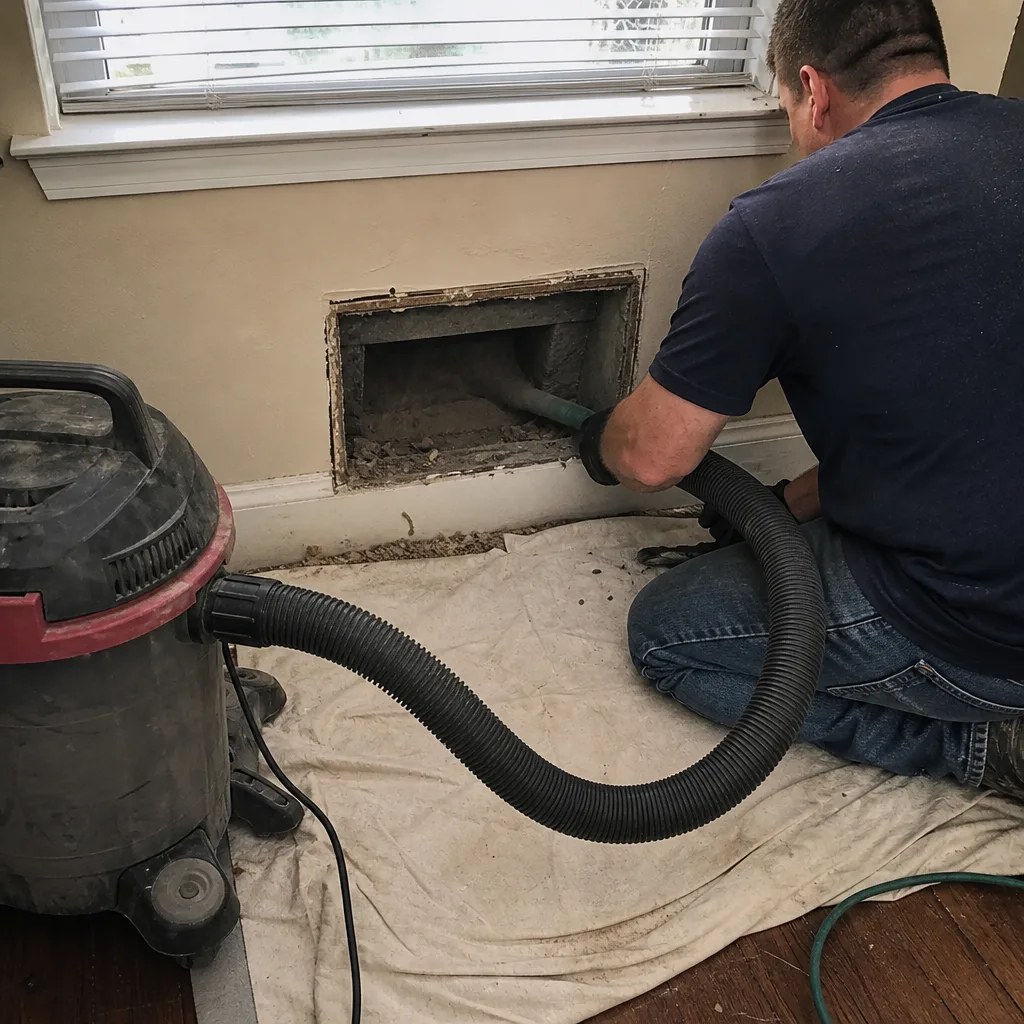 Before
 After
After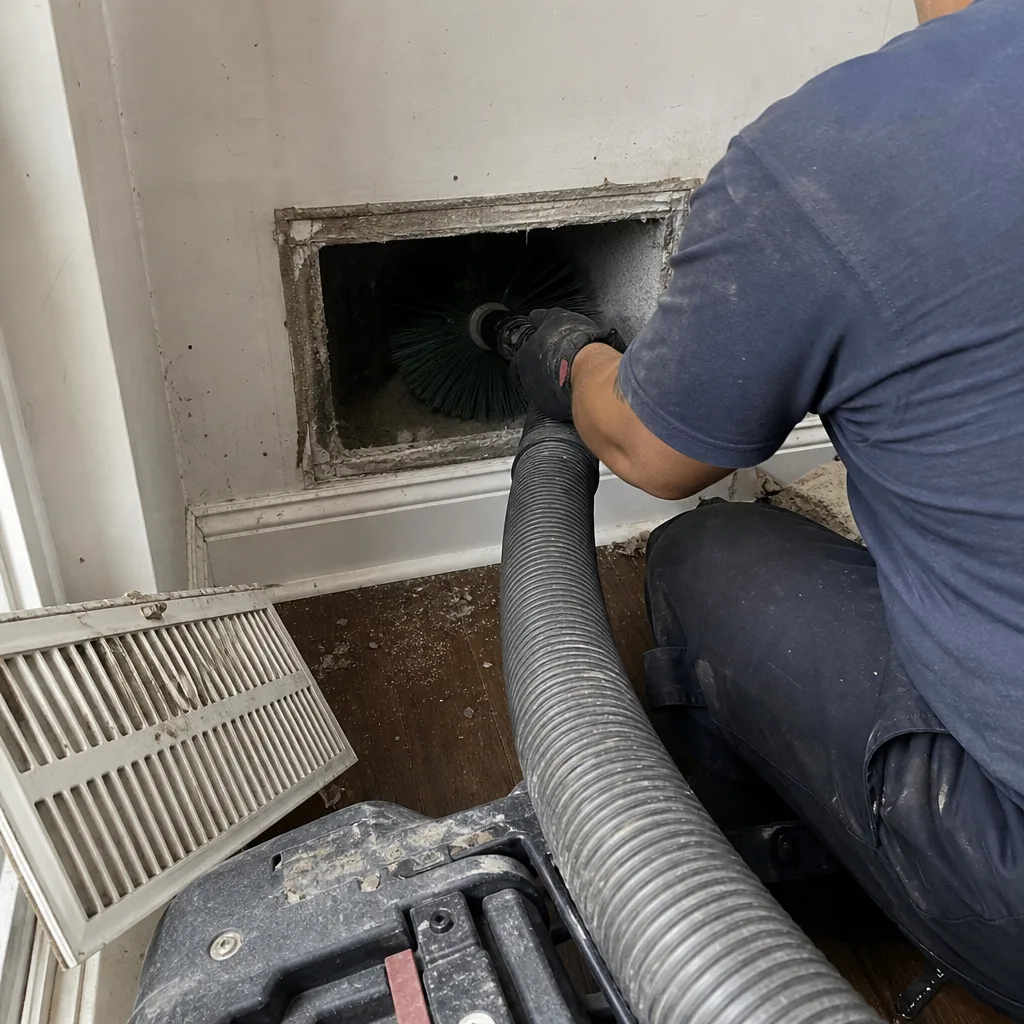 Before
 After
After