
Last updated October 15, 2026
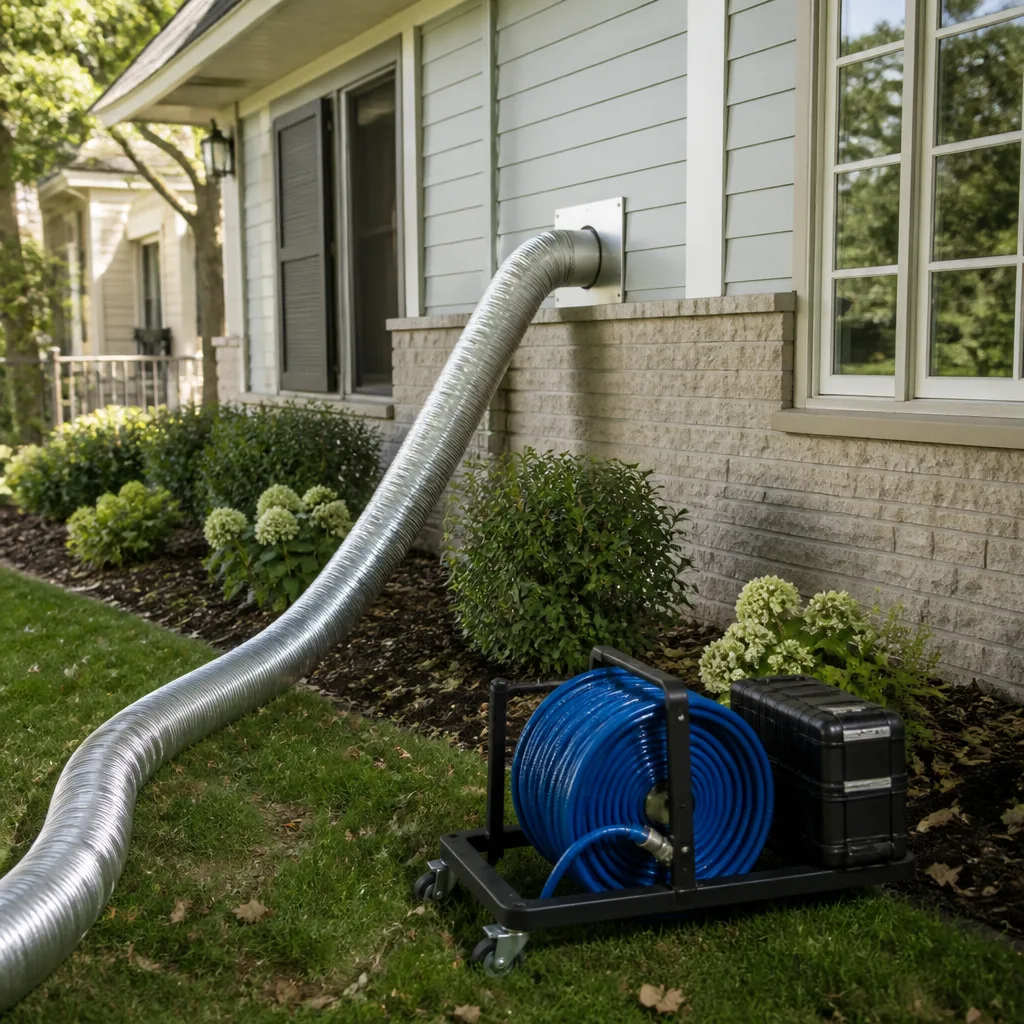 Whole-home duct cleaning
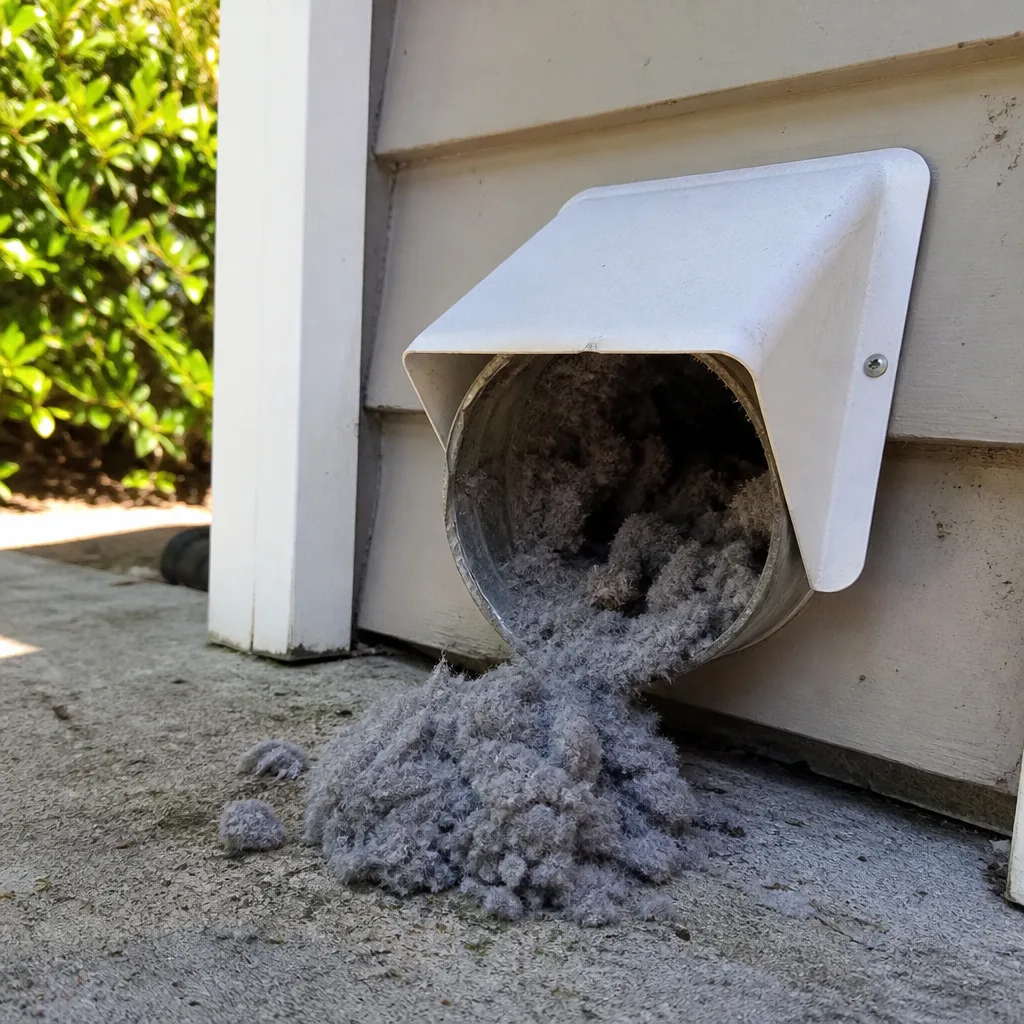 Dryer vent cleaning
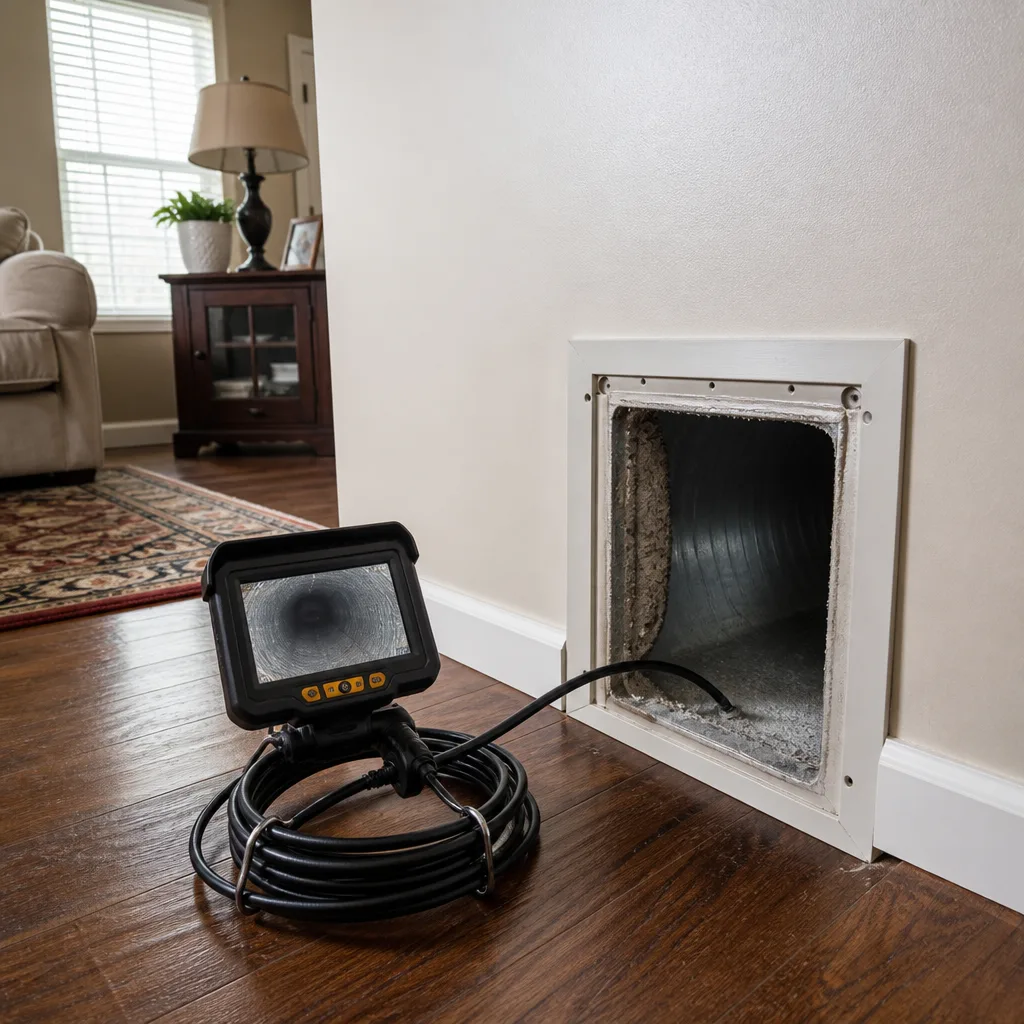 Camera inspection
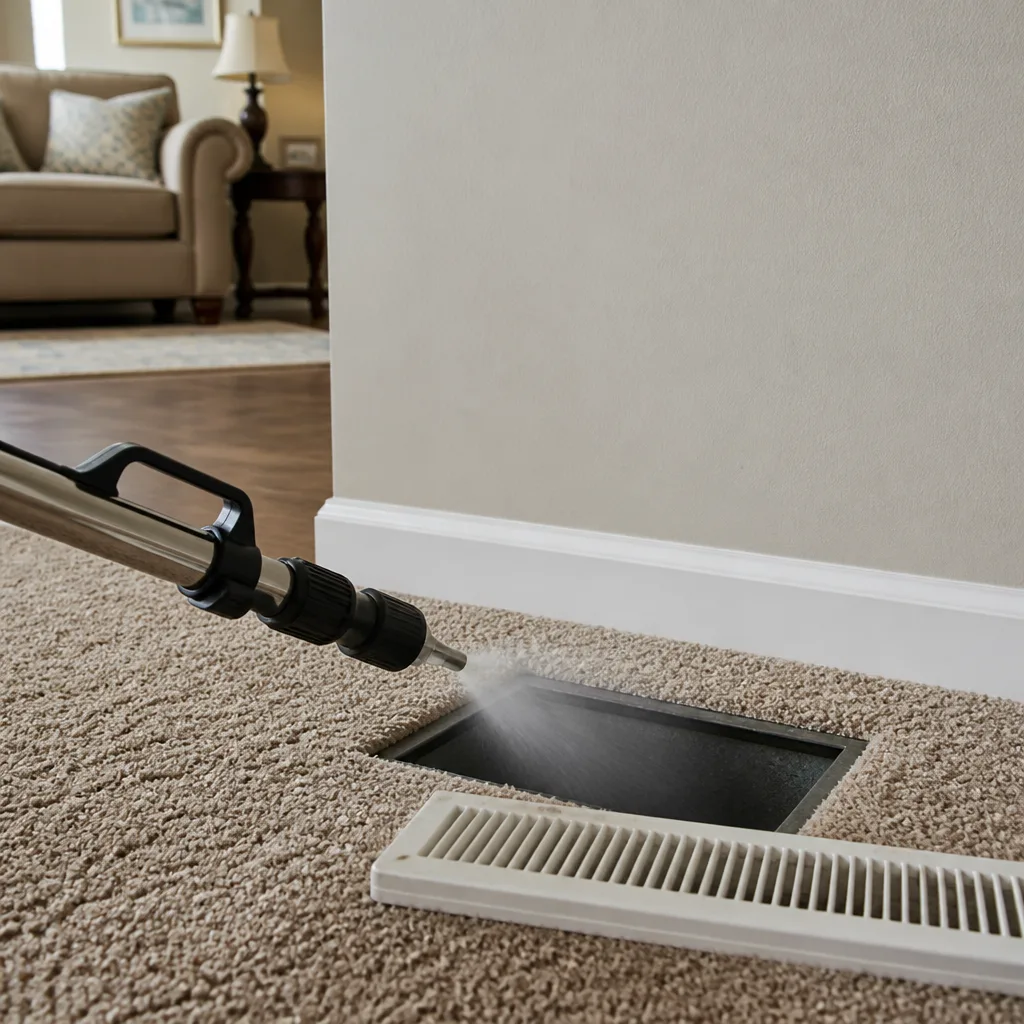 Sanitizing & deodorizing
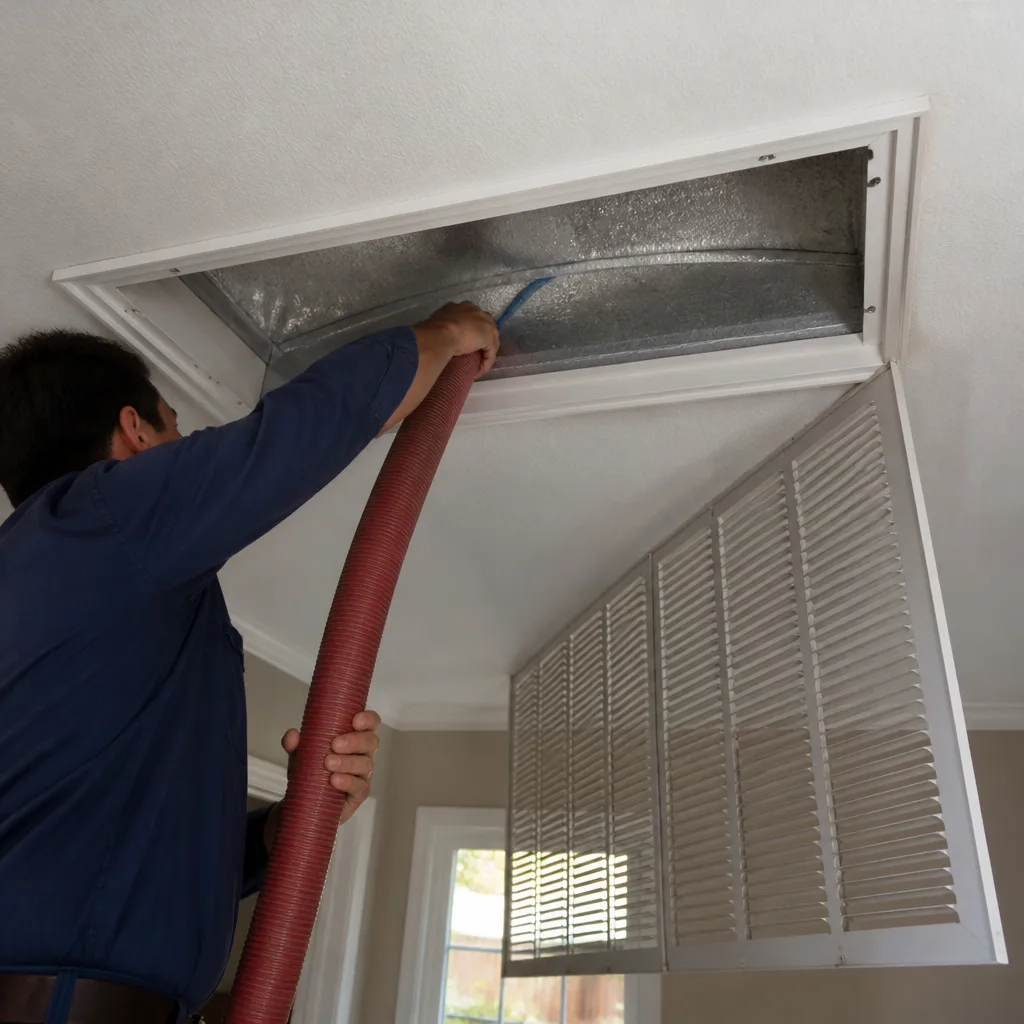
Whole-system duct and dryer vent check with before-and-after photos - you see exactly what came out of your vents
That "$99 whole-house special" is a bait ad - the real number appears once they are in your hallway, or the "clean" is a shop-vac at the register. We photograph the inside of your ducts before and after instead.
Air Duct Cleaning Permits, Codes & Inspections in GA: What You Need to Know
Most Atlanta homeowners assume a duct cleaning is always permit-free. It usually is. But if your “duct cleaner” quotes you on replacing flex duct or sealing leaks with Aeroseal, you’ve crossed out of a cleaning job and into a different legal and insurance universe. Georgia’s rules on this are specific, and the attorney general’s office doesn’t care whether the technician had good intentions. Here’s the surprising part: a large share of air duct cleaning companies operating in metro Atlanta are not licensed for the work they actually quote.
Quick Answer
Air duct cleaning itself does not require a permit or a state license in Georgia. The Georgia State Licensing Board draws a hard line: cleaning (removing debris with a vacuum or brush) is unregulated, but “duct work” (replacing duct board, modifying the air handler, or applying sealant like Aeroseal) requires a licensed conditioned air contractor. If the job stops at cleaning, you need no county permit. If it doesn’t stop there, you need someone with a license and an insurance rider that actually covers duct modification.
Styles & brands we work with
Table of Contents
- The Legal Line: Cleaning vs. Duct Work in Georgia
- When Aeroseal Duct Sealing Moves You into Permitted Territory
- Your Homeowner’s Insurance and Unlicensed Duct Work
- HOA and Condo Work-Order Rules in Atlanta-Area Communities
- Asbestos-Containing Duct Insulation in Pre-1980 Atlanta Homes
- What Atlanta-Area Counties Actually Check During Inspections
- Questions to Ask a Duct Cleaning Company Before They Touch Anything
- Permit Costs and Inspection Fees in Metro Atlanta
The Legal Line: Cleaning vs. Duct Work in Georgia
Here’s the rule in plain language. The Georgia State Licensing Board for Residential and General Contractors says that “cleaning” of ducts is not a regulated activity. No state license, no county permit, no inspection. A technician may connect a Rotobrush rotary brush or a Nikro HEPA vacuum to your ductwork and remove debris, dust, and loose particulate without notifying anyone. That’s a cleaning.
“Duct work” is different. Replacing a section of duct board, installing new flex duct, modifying the air handler, or applying a structural sealant are all classified as installation or modification of a conditioned air system. In Georgia, that work requires a Conditioned Air Contractor license, and the county wants to see the permit before the work happens. The reason is fundamental: a sealed air system operates under pressure and affects indoor air quality. If a poorly sealed joint leaks, you’re not just losing energy. You’re pulling attic air into the living space.
- If the job is just cleaning the interior of existing ducts: no license, no permit, no county inspection. That’s the Air Duct Cleaning in Atlanta service we perform routinely.
- If the job includes replacing duct sections, adding register boxes, or modifying the air handler: you’re now in conditioned air contractor territory. A permit is required from the local building department, and the work must be done by a licensed contractor.
- If the job includes applying Aeroseal or any sealant product: Georgia counties treat this as duct modification, not cleaning. Permits apply in most Atlanta-area jurisdictions.
We have seen this exact scenario in East Cobb and Brookhaven: a homeowner books a cleaning, the technician opens the return plenum, says the flex duct is old and needs replacement, and hands over a handwritten quote. The homeowner says yes because it’s convenient. Then the system leaks, the county has no record of a permit, and the insurance company declines the claim. The origin of the problem is the misclassification of the work.
If you want a straight answer, ask the company one question: “Will this job include any replacement or modification of ductwork?” If the answer is anything other than “no,” the job needs a licensed conditioned air contractor. And if the company can’t produce a license number to back up that kind of work, you don’t have a contractor. You have a risk.
We’re part of the Relay Home Co. family and built our process around the simplest version of this: we quote the cleaning, we do the cleaning, and we never turn a cleaning visit into an unpermitted construction project. If we find ductwork that’s damaged beyond cleaning, we tell you and refer you to a licensed conditioned air contractor. That’s the line. It protects you and it keeps the work honest.
When Aeroseal Duct Sealing Moves You into Permitted Territory
Aeroseal is a specific product: a polymer aerosol mist injected into sealed ductwork under pressure. It’s designed to find and seal small leaks from the inside out. It’s clever. It’s also the most common way a “cleaning” job drifts into regulated air system work. At least one major duct cleaning franchise now pushes Aeroseal as an add-on, and a lot of Atlanta homeowners don’t realize the ground has shifted under their feet. See our Air Duct Cleaning Warning Signs: A Atlanta Homeowner’s Reference Guide to spot red flags before they become problems.
Here’s the rule in practice. If an unlicensed company applies Aeroseal to your system, they haven’t just modified your ductwork. They’ve modified it in a way that’s hard to undo. The sealant deposits are designed to be permanent. If the job goes wrong, the fix isn’t a simple wipe-down. It’s often a duct replacement. That’s a big, unpermitted, uninsured problem.
Georgia counties that require permits for duct modification treat Aeroseal the same way they treat a patch-and-replace. In Dekalb County and Fulton County, the building departments expect a mechanical permit when the ductwork is being altered. If the county finds out after the fact, the homeowner is the one who pays the double permit fee and the inspection costs. Not the company that sold the add-on.
What we tell our customers about Aeroseal
We don’t apply Aeroseal. It’s not a cleaning service and we’re not licensed to do modification work. When a customer asks about it, we explain the permit question, the insurance question, and the warranty question, in that order. A licensed conditioned air contractor who pulls a permit and carries modification insurance is the right person for that work. If the company quoting your Aeroseal job can’t show you a license number and a permit outline, treat it as a red flag. In Atlanta, competent licensed contractors are not hard to find. Unlicensed Aeroseal applicators are easier to find, and that’s exactly the problem.
Your Homeowner’s Insurance and Unlicensed Duct Work
This is where the issue stops being theoretical. Imagine an unlicensed technician replaces a section of duct board in your attic. Six months later, the new joint sweats in the Atlanta humidity and grows mold. You file a claim with your homeowner’s insurance. The adjuster asks one question: “Who did the work?”
If the answer is “a duct cleaning company,” the claim gets complicated. Georgia homeowner’s policies generally cover sudden and accidental water damage, not damage from defective workmanship. When the workmanship was done by an unlicensed person on a system that should have required a permit, the insurer has two solid reasons to deny the claim. The first is that the work was illegal. The second is that the damage arose from the work itself, not from an external event.
We’ve talked to enough Atlanta homeowners who have lived this story. The insurance company doesn’t care what the technician promised. They care what the contract says, and what the contractor’s license number is, and whether a permit was pulled. If the answer is no, no, and no, the homeowner eats the cost of the repair. Sometimes that’s $3,000 to $6,000 in rework.
How to protect yourself in one minute
- Before any work that involves duct replacement or modification, ask for a Conditioned Air Contractor license number. In Georgia, you can verify that license through the Secretary of State’s office online, in about a minute.
- Confirm that the company carries general liability insurance that covers duct modification, not just cleaning. Ask to see the certificate. The certificate is a normal request and honest companies don’t blink at it.
- Ask who pulls the permit. In most Atlanta-area counties, the contractor pulls the permit, not the homeowner. If the company says “we’ll have you pull it,” that’s a dodge.
For our part at Cardinal Air Duct Atlanta, we stay on the cleaning side of this line. Omar Haddad runs the shop with a simple rule: our insurance covers the work we do, and the work we do is cleaning. When a job needs a conditioned air contractor, that’s who we tell the customer to call. It’s cleaner for everyone. You don’t want a company that promises to do everything and answers to nobody.
HOA and Condo Work-Order Rules in Atlanta-Area Communities
Beyond the state and county codes, Atlanta-area HOAs layer their own rules on top. This is especially true in high-rises and townhome communities where ductwork is shared or runs through common areas. You can have a perfectly legal, permit-free duct cleaning, and still violate an HOA rule by simply bringing a vacuum up the freight elevator.
The pattern we see in Buckhead condos and Midtown high-rises is consistent. The HOA requires a certificate of insurance from every vendor before they’ll allow work inside. They often require a work order filed with the concierge or management office 24 to 48 hours in advance. Some buildings only allow work during certain hours, and a few require the technician to park in a designated service bay. If the HOA doesn’t get that paperwork, the technician gets turned away at the door, and you get a fine.
For townhome communities in places like Kirkwood, Decatur, and Smyrna, the usual rule is about rooftop access. The exhaust duct for a dryer may terminate through a shared roof. To clean it, the technician needs to go through a shared attic space or access a rooftop hatch. The HOA often requires notice before anyone steps onto the roof. Again, not a state code issue. But it’s very much a “will this appointment actually happen” issue.
What to do before you book
- Check your community’s vendor policy. It’s usually in the HOA handbook or the condo association’s rules. If it says “certificate of insurance required for all service vendors,” that’s your target.
- Ask the duct cleaning company if they provide a COI before arrival. At Cardinal, we send the certificate of insurance proactively to the management office as part of The Relay Standard. You get a trackable arrival window, the HOA gets the paperwork, and no one gets turned around at the lobby.
- Ask about roof or shared-space access. If your dryer vent or an exhaust duct terminates through a shared area, confirm the company has done work in that kind of community before. It changes the toolkit and the timeline.
For most single-family homes in Atlanta, HOA rules are a minor issue. But for condo owners and townhome residents, the HOA is the real front door. If you don’t get the paperwork right, the cleaning doesn’t happen, no matter how clean your ducts are.
Asbestos-Containing Duct Insulation in Pre-1980 Atlanta Homes
Atlanta has a lot of pre-1980 housing stock. Inman Park, Candler Park, Grant Park, Morningside, the older sections of Decatur: these neighborhoods are full of homes where the original ductwork is wrapped in insulation that may contain asbestos. This is the one scenario where a cleaning job triggers a written notification requirement, because if the insulation is friable, the cleaning process itself can disturb it.
Here’s how to identify the risk. In older Atlanta homes, duct insulation often looks like a white or gray paper wrapping around the outside of metal ducts. It may be taped at the seams. Sometimes it’s painted over. That paper wrap, if it contains asbestos and is deteriorated or torn, releases fibers when disturbed. A brush system that bangs against the outside of the ducts can do exactly that.
Georgia follows the federal NESHAP rules for asbestos in residential buildings of four or fewer units. Unless a homeowner is demolishing or renovating in a way that disturbs more than the threshold amounts, there is no automatic permit requirement for a simple duct cleaning. But the EPA and Georgia EPD require that any asbestos-containing material identified on site be handled under proper notification and disposal procedures. If a technician sees suspicious insulation and says “we can just clean around it,” walk away.
The practical test
- Is the home built before 1980? If yes, assume the duct wrap may contain asbestos until a lab test says otherwise.
- Is the insulation paper-like, white or gray, and wrapped in layers? That’s the classic look of asbestos-containing duct wrap in Atlanta’s older housing stock.
- Is it torn, crumbling, or powdery? That’s friable asbestos. It needs professional abatement, not cleaning.
If testing confirms asbestos, the right path is a licensed abatement contractor who handles removal, disposal, and the required notifications. It’s not cheap, but it’s a legal and safety requirement. We don’t do abatement work. When we see suspicious insulation during a cleaning assessment, we stop and tell the homeowner what we saw. It’s the only responsible response. The cleaning can wait. The disclosure can’t.
What Atlanta-Area Counties Actually Check During Inspections
When a permit is pulled for duct modification in metro Atlanta, the county inspection process is fairly predictable. Fulton, Dekalb, Cobb, Gwinnett, and Clayton counties all follow the state’s mechanical code, but each county has its own quirks, and the inspector’s focus is narrower than most homeowners expect. They’re not checking for dust. They’re checking for safety and code compliance on the work that was permitted.
Here’s the core checklist. The inspector wants to see that new duct sections are properly fastened and supported. No sags. The flex duct can’t have kinks or sharp bends. The connections must be sealed with an approved tape or mastic, not household duct tape. Duct insulation must be intact and the right R-value for the space it’s running through. And the system must pass a pressure test if the modification was substantial enough to require one.
None of that applies to cleaning, because cleaning doesn’t change the physical plant. But it matters a lot if you’re having ducts replaced, extended, or re-routed. In places like Roswell and Alpharetta, inspectors are known to be strict on support spacing for flex duct. In the city of Atlanta proper, the permitting office is more focused on the scope of work matching the permit description. If a contractor pulls a “repair” permit and then replaces half the duct run, the inspection fails and a new permit is required.
What the inspector is not checking
This is worth saying. A county inspector is not there to verify that your duct cleaning removed the dust. They aren’t measuring airflow. They aren’t testing for mold. The inspection is about code compliance on the structure of the system. This is why we tell Atlanta homeowners not to use “the county inspector will check it” as a substitute for actual before-and-after proof of cleaning. For a full breakdown of what’s involved, read The Complete Guide to Air Duct Cleaning in Atlanta. The inspector’s job and the quality of the cleaning are two separate things.
Cardinal Air Duct Atlanta handles the proof side of that equation through The Relay Standard: before-and-after photo documentation is part of every booking. You see what your ducts looked like before and after, with photos, on your phone. The inspection, if you ever need one, is about something else entirely.
Questions to Ask a Duct Cleaning Company Before They Touch Anything
Most homeowners don’t know what to ask. The result is that they ask nothing, and the technician does whatever the technician wants. Here’s the list we’d give a close friend, stated as plainly as we know how.
- “Is the work you’re quoting a cleaning or a modification?” If the answer is “both,” get the license number for the modification part. Cleaning requires no license. Modification does. There is no middle ground in Georgia.
- “Exactly what equipment are you bringing?” A professional setup uses a negative-pressure extraction system. That means the loosened debris goes straight into a HEPA vacuum, not back into your living room. We run Nikro HEPA vacuums and Rotobrush brush systems. If the company says “we use a big Shop-Vac,” you don’t have a professional.
- “What does the price include?” A written price should cover the full system, the setup, the cleaning, and the photo documentation. No per-vent pricing. No surprise add-ons at the door. At Cardinal, the price is written before any work begins and it does not change.
- “Can you send me a certificate of insurance before the appointment?” We do this as a matter of course. If a company hesitates, that’s the end of the conversation.
- “If something in my system needs to be replaced, what happens then?” The right answer is “we stop and refer you to a licensed contractor.” The wrong answer is “we can handle that too.” Remember the line.
- “Do you have a written guarantee?” Every Cardinal repair comes with a written guarantee, and the Cardinal Air Duct Atlanta home service includes the 365-Day Done Right Promise: if the work isn’t right within a full year, we return and correct it at no charge.
Ask the questions in writing. Text or email works. You want a record. If the company is legit, they’ll answer without hesitation. If they get vague when you ask about licenses and insurance, they’ve told you everything you need to know.
Permit Costs and Inspection Fees in Metro Atlanta
If your project does cross into permit territory, the fees in metro Atlanta are not huge. Most counties charge a flat mechanical permit fee plus a small inspections fee. The cost is almost never the issue. The time is the issue. Pulling a permit on a duct modification project adds several days to a week in most Atlanta-area jurisdictions, because you’re waiting for the permit office and then waiting for the inspection window.
| Jurisdiction | Typical Mechanical Permit Fee Range | Inspection Fee Range |
|---|---|---|
| City of Atlanta (Fulton) | $80 – $150 | $40 – $75 per inspection |
| Dekalb County | $60 – $120 | $35 – $65 per inspection |
| Cobb County | $50 – $110 | $30 – $60 per inspection |
| Gwinnett County | $70 – $140 | $40 – $70 per inspection |
These are ballpark ranges based on what we’ve seen in the Atlanta market. They change with the county’s fee schedule and the project’s valuation. The point is not the exact dollar amount. The point is that a permit adds days and a few hundred dollars in fees, and an unlicensed company that skips the permit is saving you a few hundred dollars while exposing you to a five-figure liability problem. It’s the worst trade in home services.
For cleaning, there is no permit fee, no inspection fee, and no waiting. That’s one of the reasons most standard air duct cleanings in Atlanta run $450 – $650 for a typical home, and that’s the whole price: no per-vent add-ons, no surprise fees at the door. The HVAC Cleaning in Atlanta service and our Dryer Vent Cleaning in Atlanta service operate the same way. Written price before work. No permits required. No surprises.
Common Mistakes to Avoid
- Assuming “certified” means licensed. A national trade group certificate is not a Georgia Conditioned Air Contractor license. Only the state license counts.
- Letting a cleaning tech quote you on duct replacement. Cleaning and replacement are legally different activities. The moment replacement enters the conversation, the job needs a licensed contractor and a permit.
- Paying for Aeroseal sealing from an unlicensed cleaner. Aeroseal is a permanent modification. If the applicator isn’t licensed, your insurance company has a ready-made reason to deny any later claim.
- Not checking the HOA work-order rules before the appointment. In Atlanta condo towers and townhome communities, the HOA controls access. No certificate of insurance, no appointment.
- Disturbing suspected asbestos duct wrap without testing. In pre-1980 Atlanta homes, the old paper wrap can contain asbestos. Cleaning around it isn’t safe. Stop and test.
- Choosing the lowest bid and then paying for it twice. Unpermitted modification work is a two-payment job. The first payment goes to the unlicensed tech. The second goes to the licensed contractor who has to fix it.
See the difference
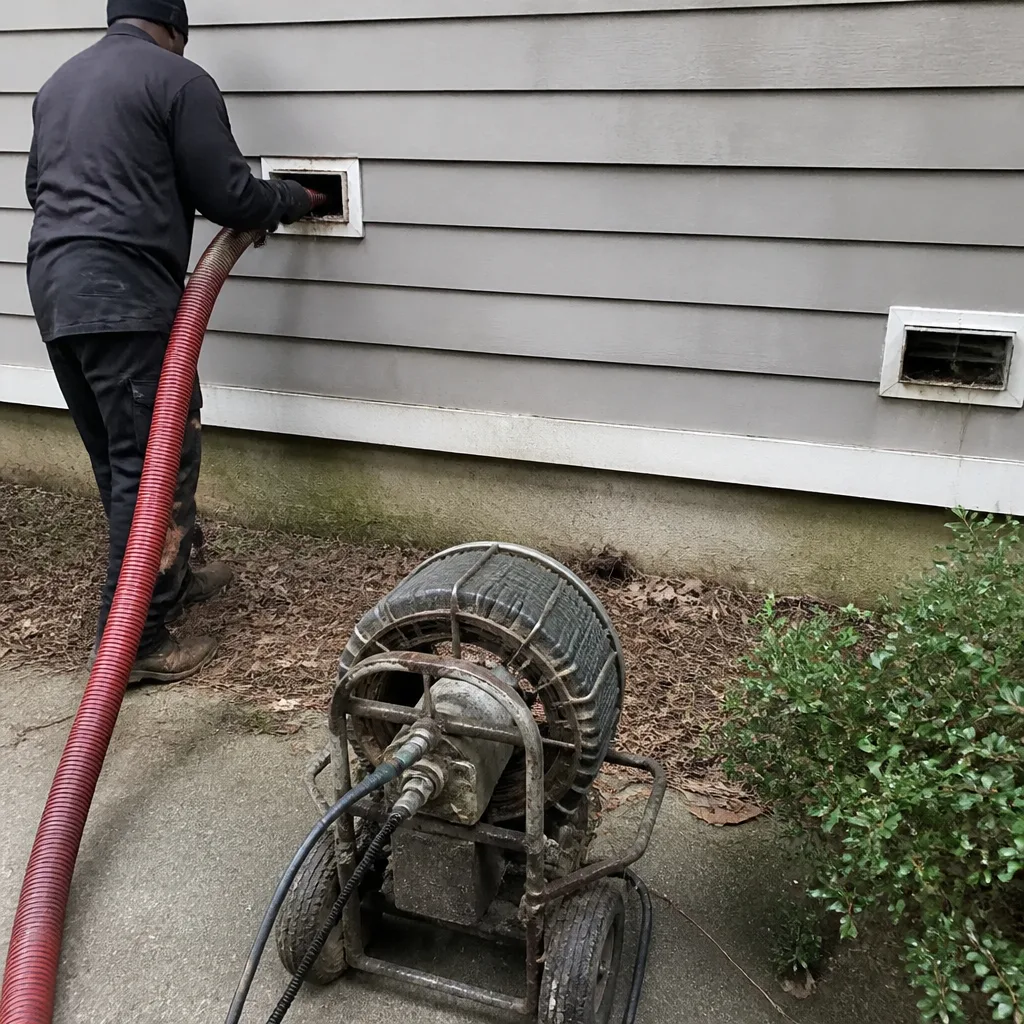 Before
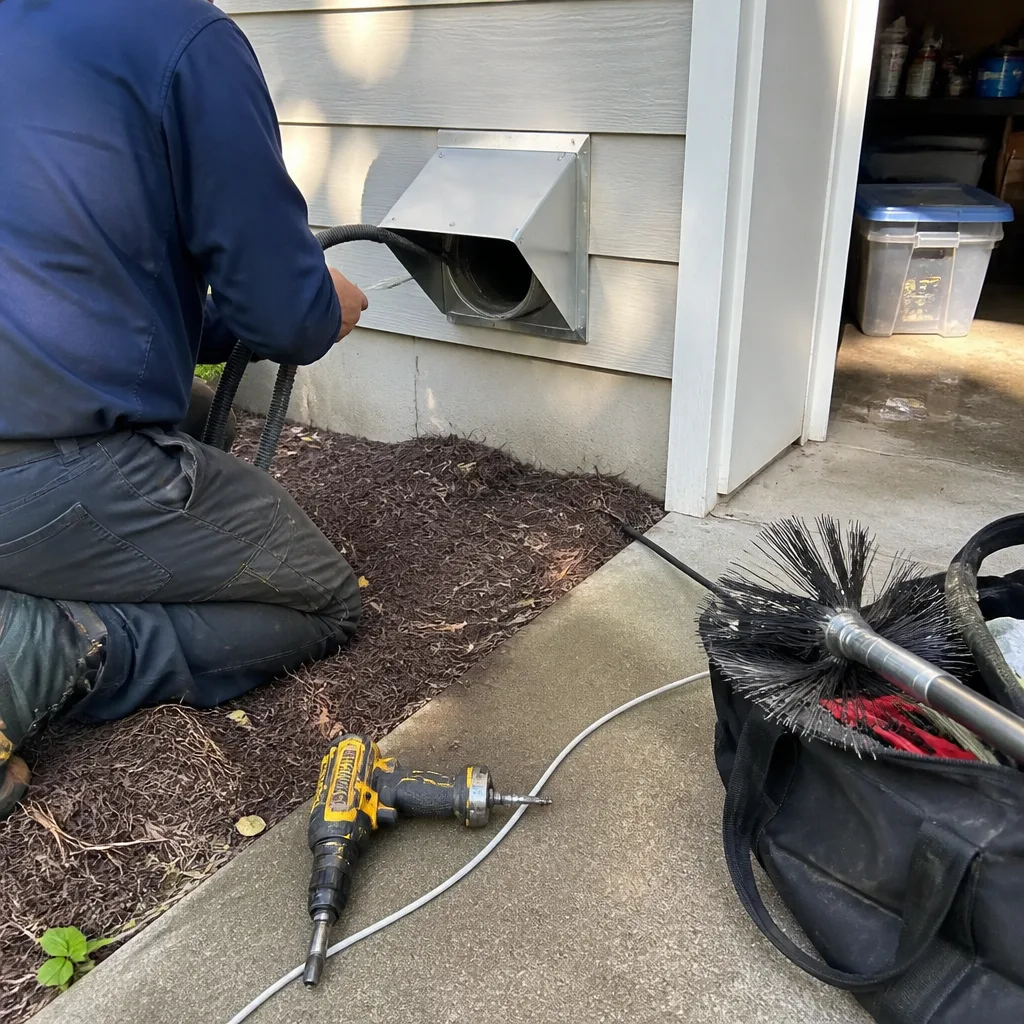 After
After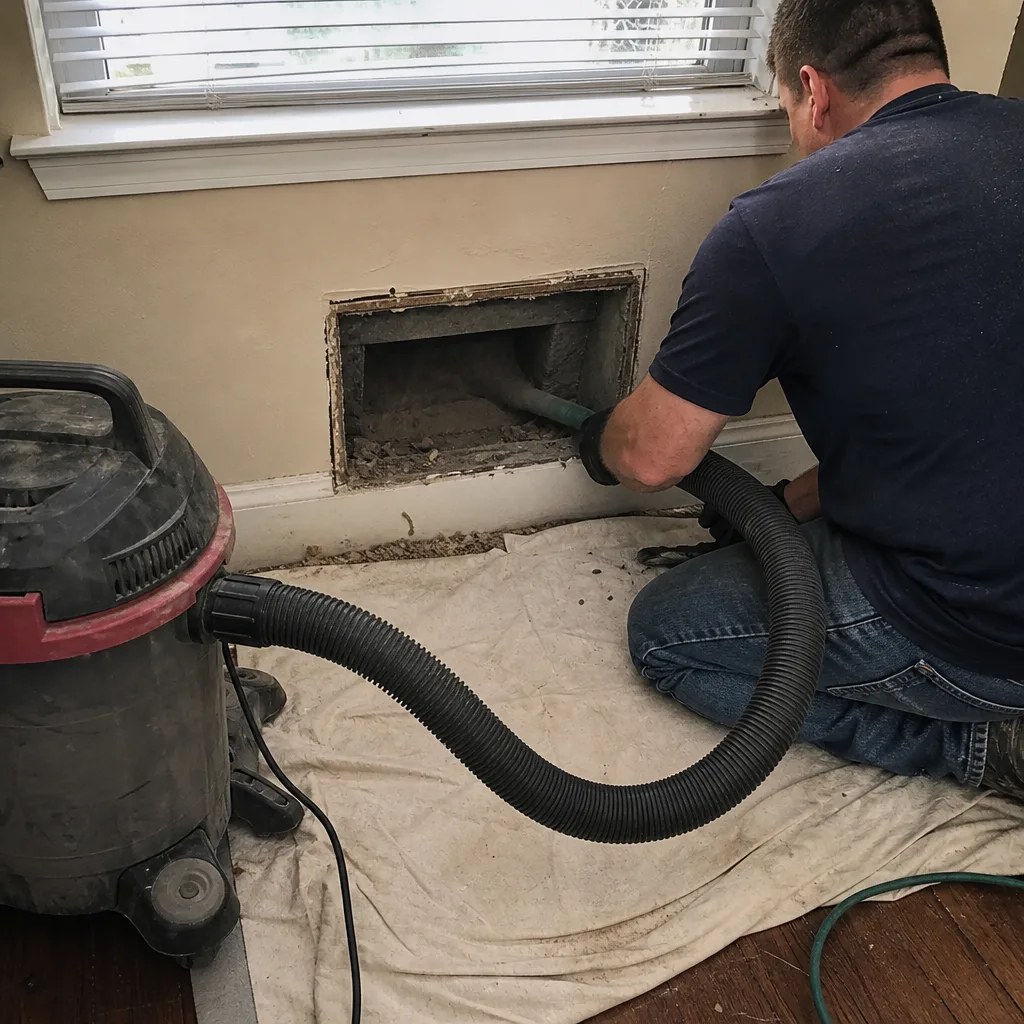 Before
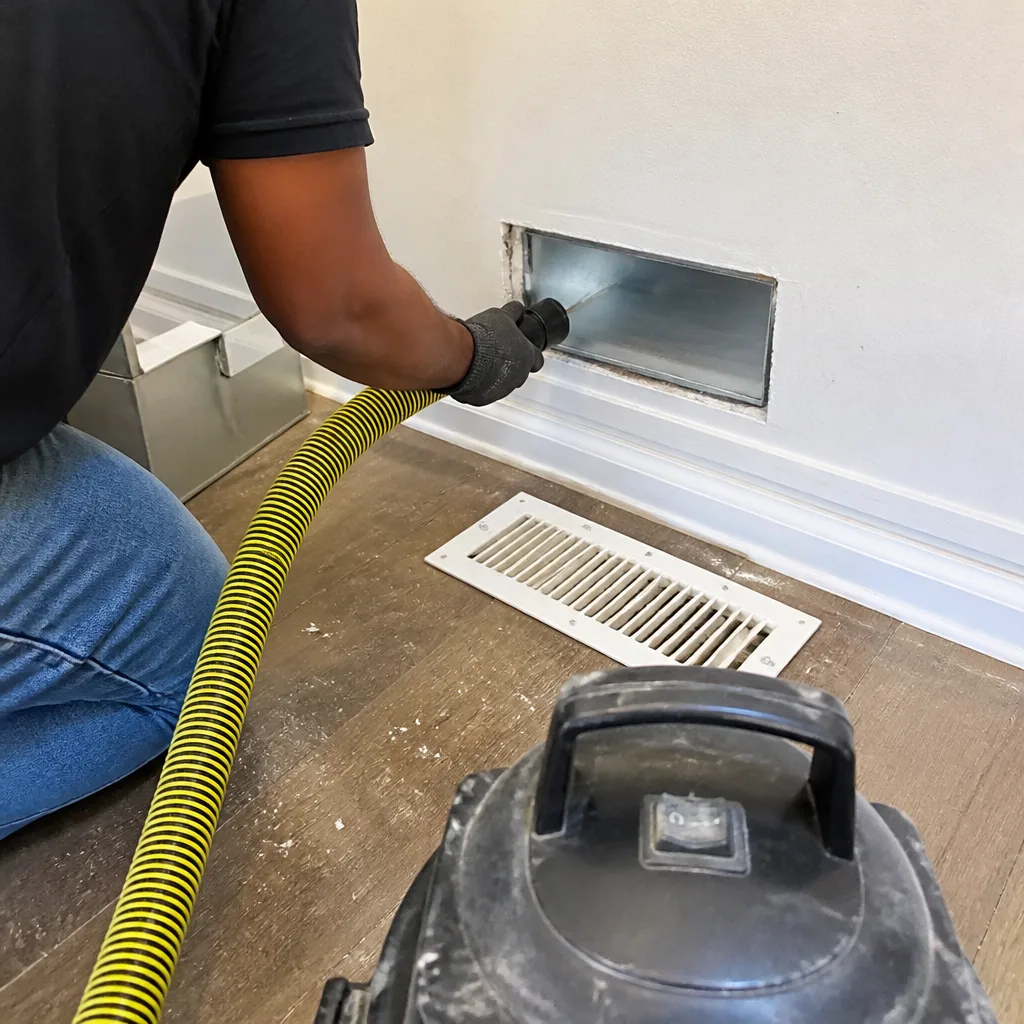 After
After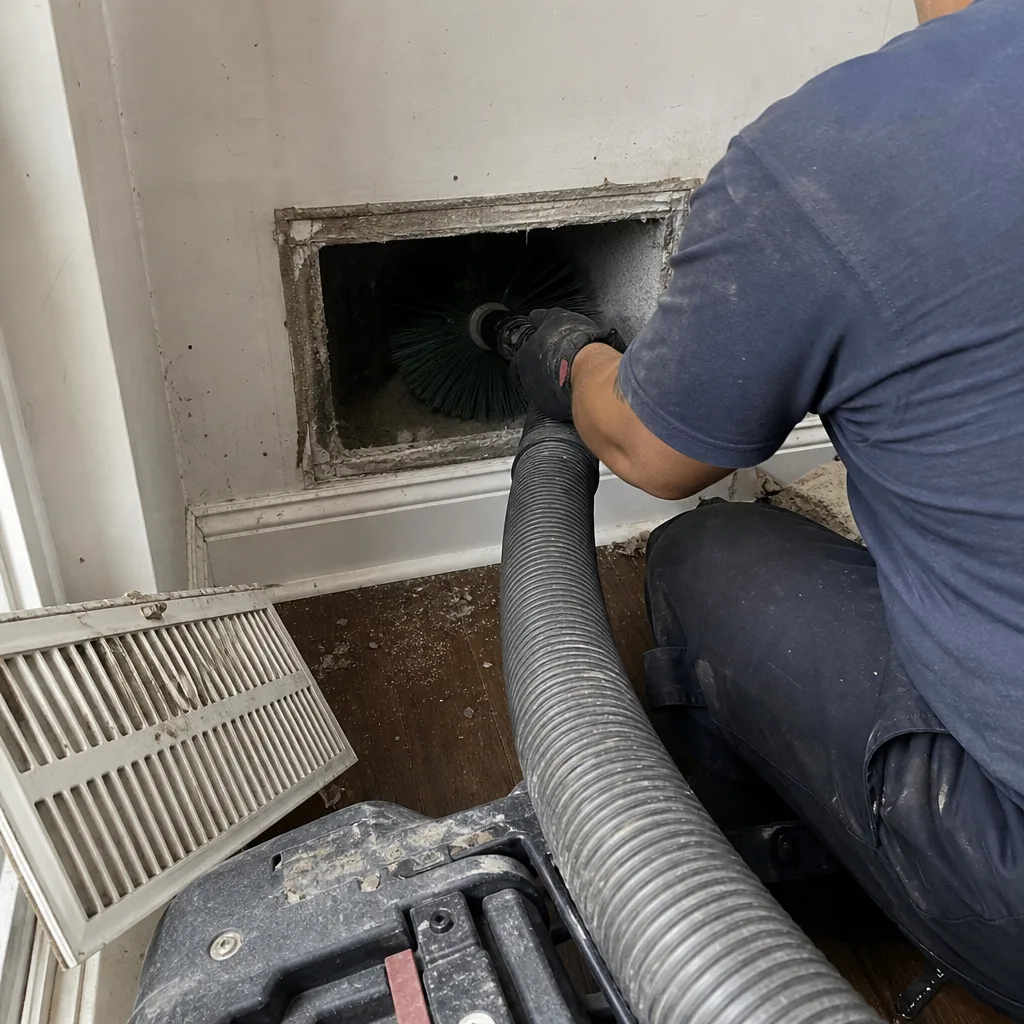 Before
 After
AfterWhen to Call a Professional
The scenarios that require a professional are clear. If you see mold on the inside of a duct boot or around a supply register, stop and get a real assessment. If your utility bills have jumped and you can feel air blowing out of duct joints in the attic, that’s a leak that a cleaning won’t fix. If you’re in a pre-1980 Atlanta home and the duct insulation is torn or powdery, call someone who can test before cleaning. If you’ve had an unlicensed technician quote you on a duct replacement and you’re now unsure what’s legal, call a licensed conditioned air contractor and get straight answers.
For the cleaning itself, Cardinal Air Duct Atlanta offers free estimates in Atlanta. Browse our more guides & resources for additional homeowner tips. We’re a duct cleaning company that stays on the cleaning side of the line, and we’ll tell you when the job is bigger than that. Call (470) 408-4927 and ask for Omar. A live person answers. No voicemail loops.
Frequently Asked Questions
No. Air duct cleaning that only removes debris from the interior of existing ducts requires no permit and no licensed contractor in Georgia. If the job includes replacement of duct sections, modification of the air handler, or application of a sealant like Aeroseal, the work crosses into conditioned air contractor territory and a permit is required from the local building department.
No. Aeroseal is a duct modification. Georgia counties that require permits for mechanical work treat Aeroseal as a permitted, licensed-contractor activity, not a cleaning add-on. If a duct cleaning company offers Aeroseal and can’t produce a Conditioned Air Contractor license, the job is being misclassified.
Your homeowner’s insurance claim will likely be denied. Georgia policies generally exclude damage caused by defective workmanship, and work done by an unlicensed person without a required permit gives the insurer strong grounds for denial. The homeowner is left paying the repair costs.
They can. Many Atlanta condo and townhome communities require a certificate of insurance and an advance work order before any vendor is allowed inside. Rooftop dryer vent access often requires specific notice. Check your community’s vendor policy before your appointment to avoid a fine and a wasted visit.
If testing confirms asbestos-containing duct insulation that will be disturbed, Georgia follows federal NESHAP rules requiring proper notification and disposal procedures. The correct step is to stop the cleaning and hire a licensed asbestos abatement contractor, especially in pre-1980 homes in neighborhoods like Inman Park, Candler Park, and Grant Park.
Most standard air duct cleanings in Atlanta run $450 – $650 for a typical single-family home. That’s the whole price: no per-vent add-ons, no surprise fees at the door. Call (470) 408-4927 for an exact quote. Estimates are free and the written price does not change.
The Bottom Line
Air duct cleaning in Georgia is a permit-free activity, and that’s good news for homeowners. The trouble starts when the “cleaning” drifts into modification without a license or a permit. Aeroseal sealing, duct board replacement, flex duct swaps, and air handler modifications are all regulated work in Atlanta. HOA rules add another layer for condo and townhome residents. Asbestos in pre-1980 homes adds a safety layer. Know the line, ask the right questions, and don’t let a convenient add-on turn into an unpermitted liability.
Written by Omar Haddad, Owner at Cardinal Air Duct Atlanta, serving Atlanta since 2005.